

How often should gutters be cleaned?
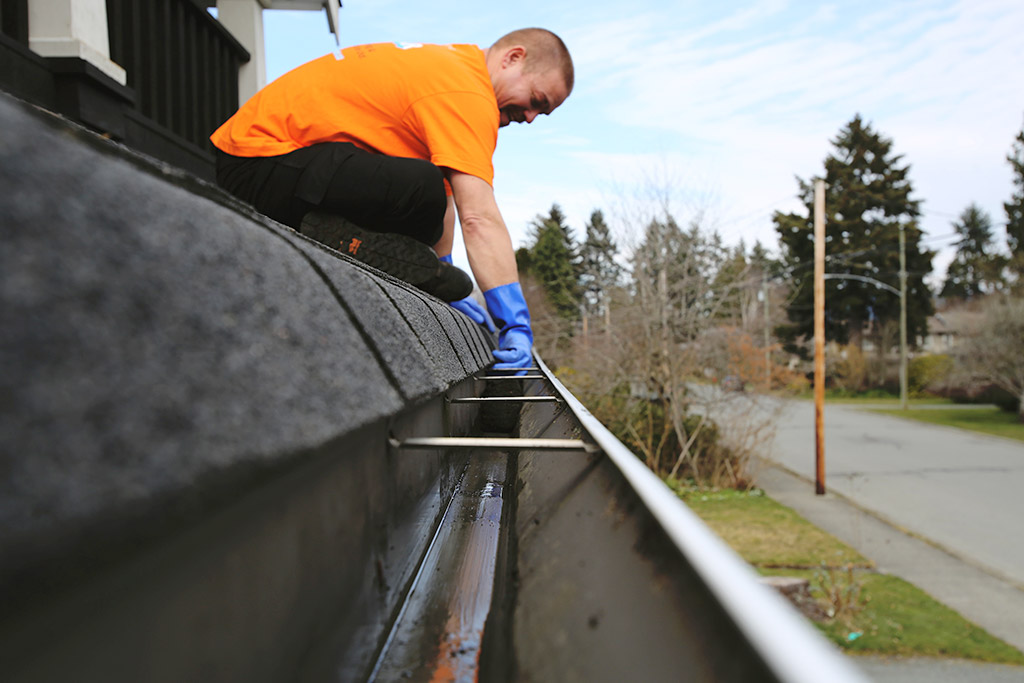
Short answer: Clean your gutters at least twice per year — once in the spring and once in the fall.
For most homes, that twice‑per‑year schedule is the minimum required to prevent clogs, overflow, and costly damage — especially in Calgary, where gutter cleaning typically costs $150–$350, while repairs can range from $800 to $4,000+.
How Often Should Roof Gutters Be Cleaned?
For the average residential home, roof gutters should be cleaned:
- Once in the spring (April–May)
- Once in the fall (September–October)
Spring Cleaning
After winter, gutters are usually filled with compacted debris that has built up over months of snow and freezing temperatures. This often includes small branches blown in by wind, roofing granules washed down from shingles, dirt and sediment, and leftover ice residue. In many cases, melting snow carries debris into downspouts where it hardens and partially blocks drainage. Cleaning in spring removes this buildup and restores proper water flow before heavy rain season begins.
Fall Cleaning
Winter is the most dangerous season for your gutter system. Most serious gutter problems happen during winter because water becomes trapped inside clogged eavestroughs and then freezes. When water cannot flow freely, it sits inside the gutter, turns to ice, expands, and creates pressure on seams, brackets, and fascia boards.
That expansion can cause gutters to crack, separate, sag, or even pull away from the house. Meltwater may also back up under shingles and lead to roof leaks.
This is why it is extremely important to leave your gutters completely clean and empty before winter begins. When gutters are clear, water can flow easily through the system instead of freezing inside it and causing costly damage.
How Often to Clean Gutters With No Trees Nearby?
Many homeowners believe that if there are no trees around their property, they can skip gutter cleaning.
That’s a costly assumption.
Both newly renovated roofs and older shingle roofs continuously produce shingle granules. These small asphalt particles wash down into your eavestroughs during rain and snowmelt. Over time, the granules accumulate at the bottom of the gutter and inside downspouts, restricting water flow and eventually causing blockages.
Even without trees, gutters also collect wind‑blown debris, dust, dirt, bird nesting material, and construction residue — especially in newer communities. All of this buildup slows drainage and increases the risk of overflow.
What Happens If You Don’t Clean Your Gutters?
Delaying cleaning may not cause immediate visible damage. But over time, problems escalate.
1. Clogged Downspouts Cause Water Backup
When downspouts clog:
- Water cannot drain properly
- Gutters overflow
- Water runs down siding
- Water pools near the foundation
This leads to:
- Basement leaks
- Soil erosion
- Foundation cracks
Water damage repair can easily reach thousands of dollars.
2. Heavy Gutters Pull Away From the House
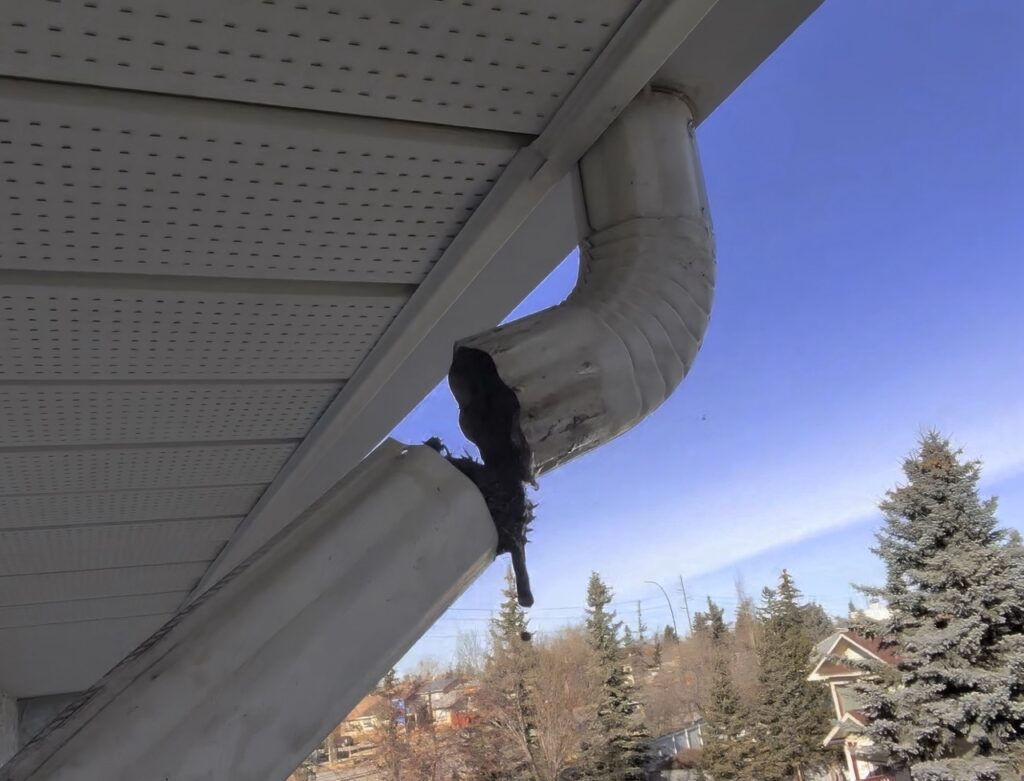
Wet debris is extremely heavy. When it sits inside gutters, especially before winter, it creates excessive weight. Add ice formation, and that weight multiplies.Common results include:
- Sagging gutters
- Loose or even broken brackets
- Detached sections
- Rotting fascia boards
At this point, the issue is no longer cleaning. It becomes a repair job. One of the biggest risks with sagging gutters is hiring an unqualified contractor to fix them cheaply. Improper reattachment can create an incorrect gutter slope, preventing water from flowing in the proper direction. When the pitch is wrong, water will continue to pool inside the gutter, leading to repeated overflow, leaks, and additional structural damage.
3. Ice Dams and Winter Damage
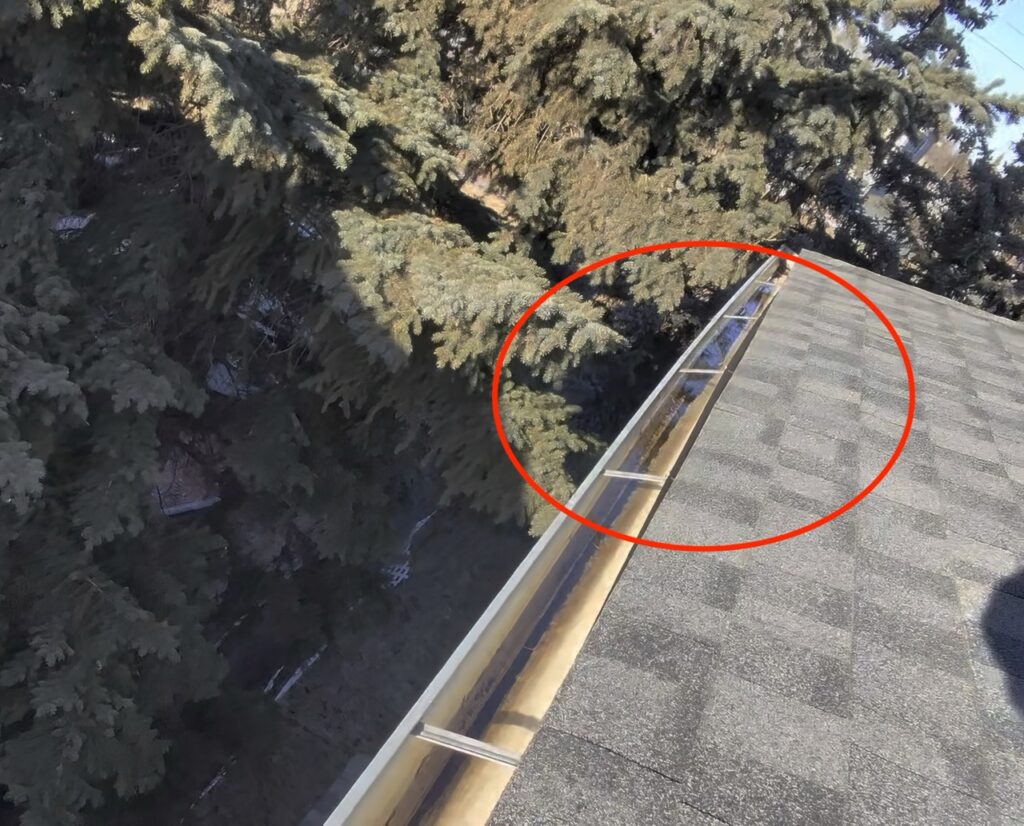
In cold climates with freeze-thaw cycles, clogged gutters contribute to ice dams.
Here’s how it happens:
- Water sits in clogged gutters
- Temperatures drop and water freezes
- Ice expands inside seams
- Meltwater backs up under shingles
This can cause:
- Roof leaks
- Ceiling damage
- Insulation damage
- Interior water stains
Winter-related gutter damage is often far more expensive than routine maintenance.
How much Gutter Repair Cost vs Gutter Cleaning Cost
Delaying gutter cleaning may seem like a small risk, but the cost difference between cleaning and repairs in Calgary is significant. Routine maintenance is predictable and affordable, while repairs become progressively more expensive as water damage spreads. A clogged system can quickly move from a simple cleaning job to structural repairs affecting fascia, siding, or even the foundation.
Below is a clearer comparison of typical service costs in Calgary:
| Service | What It Includes | Average Cost (Calgary) |
|---|---|---|
| Gutter Cleaning | Full debris removal, downspout flushing, basic inspection | $150 – $350 per visit |
| Downspout Replacement | Removal of damaged section and installation of new downspout | $250 – $600 |
| Gutter Reattachment | Securing loose or detached gutter sections with new brackets | $250 – $800 |
| Gutter Section Replacement | Replacing damaged or leaking gutter runs | $600 – $1,500 |
| Fascia Board Repair | Removal of rotted fascia and installation of new board | $800 – $2,000 |
| Full Gutter Replacement | Complete removal and new gutter system installation | $1,500 – $4,000+ |
| Foundation Repair | Crack repair, waterproofing, structural correction | $5,000+ |
Routine cleaning of gutter and downspout cleaning twice per year typically costs far less than even one structural repair. When maintenance is ignored for several seasons, total repair bills can easily exceed $10,000 once water damage spreads into roofing, fascia, or foundation components.
Final Answer: How Often Should I Clean Gutters?
For most homes:
- Minimum twice per year
- Three to four times if surrounded by trees
- At least once annually even with no trees
If you want to avoid expensive gutter repair cost and major water damage, regular cleaning is essential.
Gutters are designed to protect your home from water.
When they fail, water always finds another way inside.
Routine maintenance keeps small problems small — and prevents minor debris from turning into major repair bills.